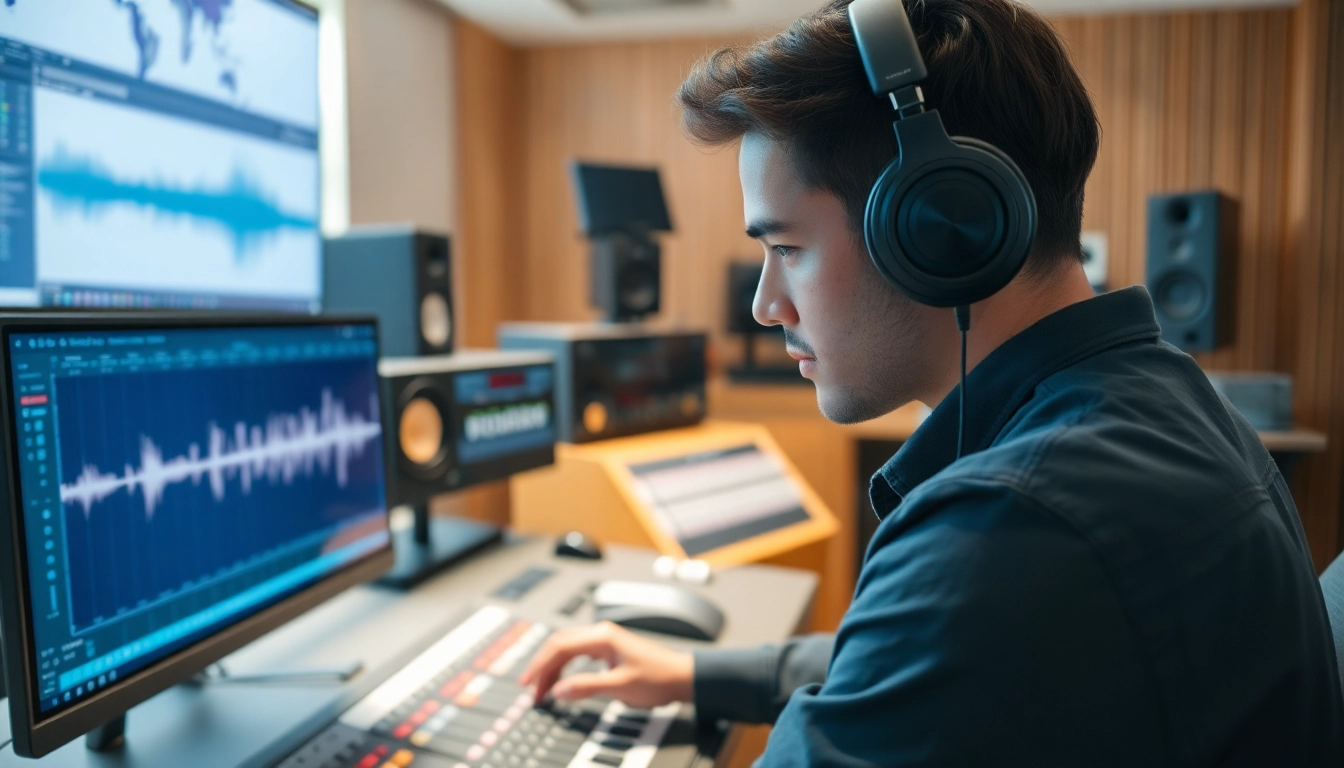
Understanding Online Mastering Services
What Are Online Mastering Services?
Online mastering services are digital platforms that allow musicians and audio engineers to refine and finalize recorded music tracks remotely. Unlike traditional mastering, which necessitates in-person sessions in specialized studios, these services offer convenience and accessibility to artists across the globe. A musician uploads their audio tracks to a website, where skilled mastering engineers apply the finishing touches, ensuring that the music meets industry standards for loudness, clarity, and overall sonic quality. Utilizing online mastering services can democratize the music production process, making high-quality mastering accessible to independent artists without significant financial investment.
Benefits of Using Online Mastering Services
The advantages of utilizing online mastering services are substantial and varied, making them an appealing option for many musicians. Primarily, they offer cost-effectiveness; traditional mastering can be prohibitively expensive. With online services, you often find tiered pricing that caters to different budgets. Additionally, the convenience of mastering from anywhere and having access to seasoned mastering engineers globally expands your options.
Moreover, many online platforms make it easy to get quick turnaround times, with some services promising results in as little as 24 hours. Their intuitive interfaces often allow for seamless track uploads and real-time revisions, thereby streamlining the process of music production. Another noteworthy benefit is the abundance of resources for learning, as many services provide educational materials to help musicians understand mastering better.
How Online Mastering Differs from Traditional Methods
While both online and traditional mastering serve the same fundamental purpose, they exhibit significant differences in process, accessibility, and interaction. Traditional mastering typically occurs in a specialized studio equipped with high-end equipment and acoustics, overseen by experienced professionals. This setup engenders a tactile, hands-on interaction where engineers can make immediate adjustments based on the acoustics of the room.
In contrast, online mastering is predominantly a digital experience. Musicians upload their tracks to an online platform, where algorithms and automated processes often facilitate initial mastering. Although many online services have experienced engineers assess the tracks, the interaction is less personal and can lack the nuanced, acoustic feedback that traditional studio environments provide.
Choosing the Right Online Mastering Service
Factors to Consider When Selecting a Service
When deciding on an online mastering service, there are several critical factors to contemplate. User interface is paramount; an intuitive platform will allow for easy navigation and track uploads. Look for services that provide detailed information about their mastering process, which indicates a commitment to quality.
Another imperative consideration is the qualifications and experience of the mastering engineers. Many services will outright display their engineers’ credentials or portfolios, giving you insight into their expertise. Customer reviews and testimonials are invaluable in helping potential users assess the reputation and results of a particular service.
Evaluating the Quality of Online Mastering
Assessing the quality of online mastering services can initially be challenging due to the remote nature of interaction. Most platforms offer sample tracks or before-and-after comparisons which can be highly informative. Listen to these samples critically, examining aspects like clarity, loudness, and overall sonic balance. Ensure the service supports various audio formats for compatibility with your projects, as well, to avoid potential issues down the line.
Additionally, consider the level of customization offered. Optimal mastering should align with your individual style and intent for a track. Some services allow you to submit notes on your vision, while others may provide preset options to guide the mastering process.
Cost Implications of Choosing Online Mastering
Cost is undoubtedly one of the pivotal factors influencing the selection of an online mastering service. Traditional methods, as previously mentioned, can range in the hundreds or even thousands of dollars. On the other hand, online services typically present a more approachable price point, with options tailored to various budgets.
When analyzing costs, consider factors such as the number of tracks, complexity of mastering required, and any additional services provided, such as mix critiques or promotional tools. Be cautious of services that appear deceptively inexpensive, as low costs can sometimes correlate with subpar quality. It’s essential to find a balance between affordability and the value that comes with more established firms.
Common Challenges with Online Mastering Services
Understanding Audio Formats and Compatibility
One common challenge musicians face when utilizing online mastering services revolves around audio formats. Misunderstandings regarding the required file types can lead to frustrating delays and lower-quality results. It’s paramount to familiarize yourself with the file formats accepted by your chosen service—commonly accepted formats usually include WAV and AIFF.
This understanding not only simplifies the upload process but ensures that the engineers work with the best possible quality. Always check to confirm that your files meet the specific guidelines provided by the service to avoid redundancies.
Managing Feedback and Revisions
Another prevalent issue is the management of feedback and revision requests. Effective communication is critical to achieving the desired results. Unlike face-to-face interactions typical in traditional settings, online platforms typically require written communication to convey feedback. Being clear and concise about your expectations and preferences will facilitate a more productive collaboration.
Many platforms allow you to provide specific time-stamped comments on particular sections of the track. Learning to utilize these features can significantly enhance the mastering process, helping engineers understand your vision.
Learning Curve for New Users
For those new to the music production industry, online mastering can present a steep learning curve. Many musicians may feel overwhelmed with the technology and processes involved. Online mastering platforms often feature educational resources, including articles, video tutorials, and FAQs, to assist users in navigating their services.
Engaging with these resources can provide valuable insights, enabling you to understand what can be improved in your mixes before submission and how to communicate effectively with mastering engineers.
Best Practices for Effective Online Mastering
Preparing Your Track for Online Mastering
Preparation is paramount when it comes to mastering your track online. Before submitting your audio, ensure that it is mixed optimally, avoiding any clipping or distortion. It’s advisable to leave a margin of headroom (at least -6 dB) to allow mastering engineers the leeway needed for adjustments. Make sure to export your track in the recommended format and quality settings that the mastering service stipulates.
Accompanying your track with notes that describe your artistic vision and any specific requests can significantly enhance the mastering outcome. This guidance provides engineers with the context necessary to align their mastering process with your intent creatively.
Communicating Effectively with Engineers
Effective communication is crucial for a fruitful collaboration with mastering engineers. As you submit your track, be as detailed as possible when expressing your expectations and the nuances you wish to capture. This may include your reference tracks, describing the sound profile you aspire to achieve, and any particular elements you wish to highlight.
Do not hesitate to ask for clarifications regarding their processes, as understanding the methodologies can give you better insight into expected outcomes. A solid rapport built on clear communications often yields the best results during the mastering process.
Ensuring High-Quality Audio Uploads
To truly benefit from online mastering, ensure you upload the highest quality audio files permissible by the service. As mentioned previously, formats like WAV or AIFF at a minimum of 24-bit and a sample rate of 44.1 kHz are generally recommended. Along with the audio quality, take care to properly label your files to avoid confusion during the mastering process.
Furthermore, it’s best to check your internet connectivity to ensure stable uploads. Slow or interrupted uploads can corrupt files or result in failures, leading to unnecessary delays.
Measuring Success with Online Mastering Services
Understanding Industry Standards for Mastering
Understanding the benchmarks and standards prevalent in the music industry is critical when working with online mastering services. Mastering is not just about making music loud; it involves achieving a balanced frequency spectrum that translates well across different playback systems. Engineers typically rely on loudness meters, spectrum analyzers, and software tools to ensure that the track meets industry standards.
Familiarizing yourself with these concepts can empower you as an artist, giving you a better understanding of what mastering entails and how to evaluate the effectiveness of your final product.
Obtaining and Analyzing Feedback
Once you receive your mastered track, obtaining feedback from peers, fellow musicians, or even industry professionals can provide valuable perspectives. Coupled with your understanding of industry benchmarks, this external input can help you assess whether your track meets the intended quality and sound.
Be sure to listen critically, comparing your mastered track against reference materials that inspire you. This analysis will provide a baseline for measuring your growth and success as a musician.
Tracking Your Musical Growth Post-Mastering
Post-mastering growth goes beyond merely releasing a track; it’s about understanding your evolution as an artist. Track how listeners respond to your work and gather metrics on streams or downloads. Engagement in social media and platforms will give you insight into which elements resonate most with your audience.
Utilizing the feedback and analytics from your releases can guide your future projects, helping you make informed decisions as you continue to evolve creatively.
Frequently Asked Questions
What is online mastering?
Online mastering is the final step of audio production done remotely, where musicians upload tracks to platforms for professional finishing touches, enhancing sound quality.
How much does online mastering cost?
Costs for online mastering can vary widely, typically ranging from $30 to several hundred dollars depending on the service, complexity, and number of tracks.
Can I communicate with mastering engineers?
Yes, most online mastering services allow written communication for feedback, ensuring your vision is captured in the final track.
What audio formats should I use for mastering?
For online mastering, it’s best to use high-resolution formats like WAV or AIFF, typically in 24-bit depth and 44.1 kHz sample rate.
How long does the mastering process take?
Turnaround times vary by service, but many online platforms offer results within 24 to 72 hours, depending on workload and complexity.